Today
20
in History
26
January
February
March
April
May
June
July
August
September
October
November
December
01
Sun
02
Mon
03
Tue
04
Wed
05
Thu
06
Fri
07
Sat
08
Sun
09
Mon
10
Tue
11
Wed
12
Thu
13
Fri
14
Sat
15
Sun
16
Mon
17
Tue
18
Wed
19
Thu
20
Fri
21
Sat
22
Sun
23
Mon
24
Tue
25
Wed
26
Thu
27
Fri
28
Sat
29
Sun
30
Mon
...
11-17-1989
Velvet Revolution begins in Czechoslovakia
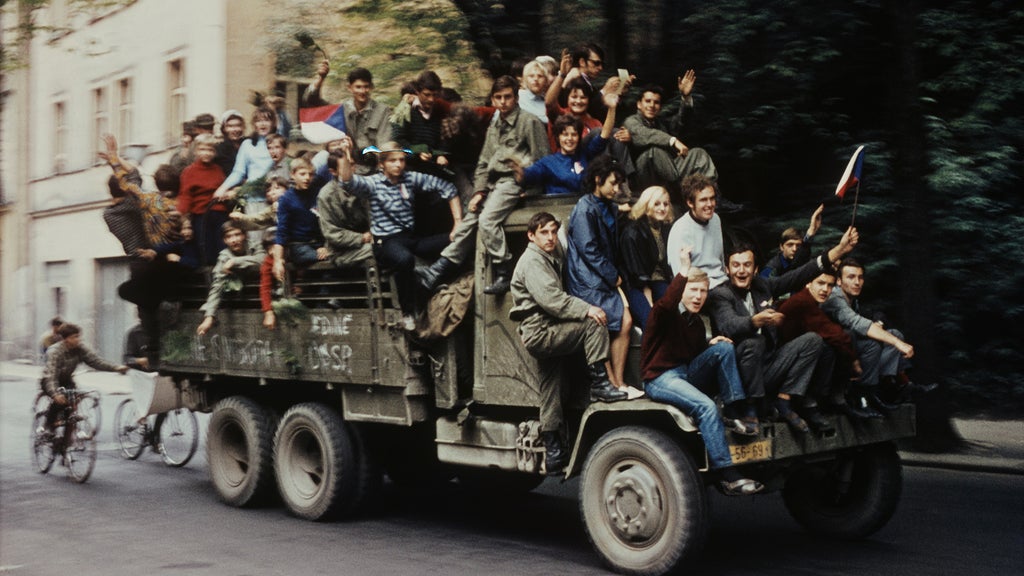
On November 17, 1989, nine days after the fall of the Berlin Wall roughly 200 miles to the north, students gather en masse in Prague, Czechoslovakia to protest the communist regime. The demonstration sets off what will become known as the Velvet Revolution, the non-violent toppling of the Czechoslovak government and one of a series of anti-communist revolutions that marked the late 1980s and early ’90s.
Protestors chose November 17 because it was International Students Day, the 50th anniversary of a Nazi attack on the University of Prague that killed nine and saw 1,200 students sent to concentration camps. The Czechoslovak government, ruled by a single, Moscow-aligned communist party since the end of World War II, allowed almost no anti-government speech and harshly suppressed dissent, but it sanctioned the International Students Day march. Anti-government sentiment had become increasingly vocal in recent years, as the economy of the Soviet Bloc declined and democratic movements overthrew the communist regimes in Poland and Hungary.
Students chanting anti-government slogans packed the streets of Bratislava as well as Prague, where they were met with violence from the police (officially, there were no deaths). Despite the police repression, protests spread to other cities and grew exponentially. Theater workers went on strike, converting their stages to forums for public discussion, and the protests grew to include citizens from all walks of life. On November 20, 500,000 protestors demonstrated in Prague’s Wenceslas Square.
Within a few days of the initial protest, the writing was on the wall for one-party rule in Czechoslovakia. The Communist Party’s leadership resigned on November 28 and an anti-communist government was in power by December 10. Václav Havel, a writer and the nation’s most famous dissident, was elected president on December 29, becoming the last president of Czechoslovakia. In the following years, the Czech and Slovak regions of the country separated peacefully in what was dubbed the Velvet Divorce, and in 1993 Havel was elected the first president of the newly-formed Czech Republic.
More news today
loading...