Today
20
in History
26
January
February
March
April
May
June
July
August
September
October
November
December
01
Sun
02
Mon
03
Tue
04
Wed
05
Thu
06
Fri
07
Sat
08
Sun
09
Mon
10
Tue
11
Wed
12
Thu
13
Fri
14
Sat
15
Sun
16
Mon
17
Tue
18
Wed
19
Thu
20
Fri
21
Sat
22
Sun
23
Mon
24
Tue
25
Wed
26
Thu
27
Fri
28
Sat
29
Sun
30
Mon
31
Tue
...
03-09-1954
President Eisenhower criticizes Senator Joseph McCarthy
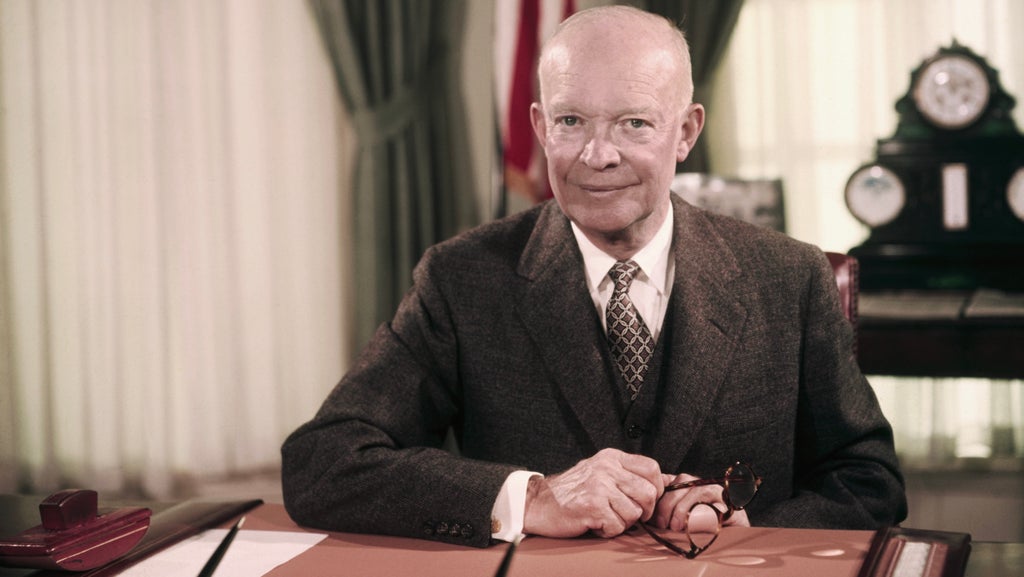
President Eisenhower writes a letter to his friend, Paul Helms, in which he privately criticizes Senator Joseph McCarthy’s approach to rooting out communists in the federal government. Two days earlier, former presidential candidate Adlai Stevenson had declared that the president’s silence on McCarthy’s actions was tantamount to approval. Eisenhower, who viewed political mud-slinging as beneath the office of the president, declined to comment publicly on Stevenson’s remark or McCarthy’s tactics.
Eisenhower was not the only respected American to criticize McCarthy on March 9. Earlier in the day, in a congressional session, Senator Ralph Flanders had publicly censured McCarthy for his vicious persecution of innocent Americans whom he suspected of communist sympathies. That evening, journalist Edward R. Murrow warned in a newscast that McCarthy was treading a fine line between investigation and persecution in pursuing suspected communist infiltration of the federal government.
Although Eisenhower had yet to criticize McCarthy in public, according to an aide’s memoirs, he did not hesitate to criticize McCarthy in private. On March 9, he referred to McCarthy as a pimple on the path of progress in a telephone call to Republican National Committee Chairman Leonard Hall. Later that evening, Eisenhower let off more steam about McCarthy in his letter to Helms. Ike worried that the country’s obsession with the bombastic McCarthy, whether pro or con, drew attention away from equally important matters facing the nation.
He complained to his friend that public policy and ideals have a tough time competing for headlines with demagogues [like McCarthy]: “It is a sad commentary on our government when such a manifestly useless and spurious thing can divert our attention from all the constructive work in which we could and should be engaged.” Ike also defended himself from Stevenson’s criticism in the letter, writing, “[I have not] acquiesced in, or by any means approve, the methods that McCarthy uses in his investigatory process. I despise them.”
Two days later, Helms wrote back in support of the president’s decision not to lambaste McCarthy in public. He agreed with Eisenhower’s opinion that the president should avoid public confrontations that might damage the proper prestige of the presidency. Many Americans at the time—and since—disagreed with Helms, believing that the president should have spoken out against McCarthy’s tactics.
More news today
loading...