Today
20
in History
26
January
February
March
April
May
June
July
August
September
October
November
December
01
Sun
02
Mon
03
Tue
04
Wed
05
Thu
06
Fri
07
Sat
08
Sun
09
Mon
10
Tue
11
Wed
12
Thu
13
Fri
14
Sat
15
Sun
16
Mon
17
Tue
18
Wed
19
Thu
20
Fri
21
Sat
22
Sun
23
Mon
24
Tue
25
Wed
26
Thu
27
Fri
28
Sat
...
02-16-1951
Joseph Stalin attacks the United Nations
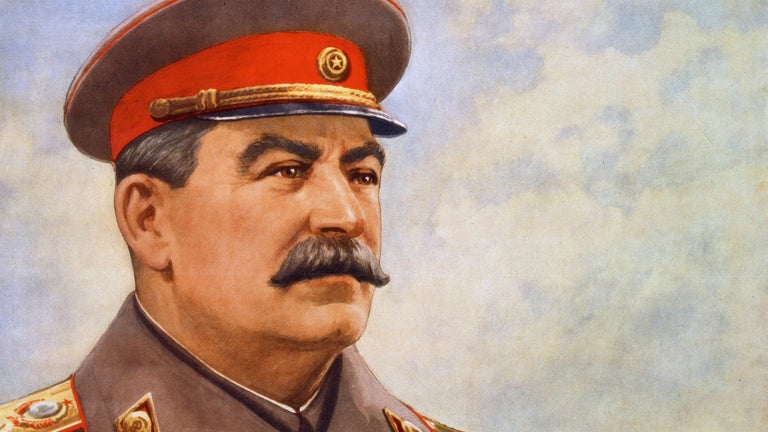
In a statement focusing on the situation in Korea, Soviet Premier Joseph Stalin charges that the United Nations has become “a weapon of aggressive war.” He also suggested that although a world war was not inevitable “at the present time,” “warmongers” in the West might trigger such a conflict.
Stalin’s comments in response to queries from the Soviet newspaper Pravda were his first public statements about the nearly year-old conflict in Korea, in which the United States, South Korea, and other member nations of the United Nations were arrayed against forces of North Korea and communist China. Coming just over two weeks after the U.N. General Assembly’s resolution condemning China as an aggressor, Stalin’s statement turned the tables by declaring that the United Nations was “burying its moral prestige and dooming itself to disintegration.” He warned that Western “warmongers,” through their aggressive posture in Korea, would “manage to entangle the popular masses in lies, deceive them, and drag them into a new world war.” In any event, he confidently predicted that Chinese forces in Korea would be victorious because the armies opposing them lacked morale and dedication to the war.
Despite the rather blistering tone of Stalin’s words, Western observers were not unduly alarmed. Stalin’s attacks on Western “aggression” were familiar, and some officials in Washington took comfort in the premier’s assertion that a world war was not inevitable “at the present time.” Indeed, there was some feeling that Stalin’s denouncement of the United Nations’ actions was actually a veiled call for negotiations through the auspices of that body. Stalin’s comments, and the intense scrutiny they were subjected to in the West, were more evidence that in the Cold War, the “war of words” was almost as significant as any actual fighting.
More news today
loading...